


Geschlechterhistorischer Salon: The Slovenian Women’s Movement in Carniola
*auf 18:00 verlegt, um die Teilnahme an der #UnisRetten #SparkursStoppen Demonstration zu ermöglichen
Der Arbeitsbereich Kultur- und Geschlechtergeschichte am Institut für Geschichte der Universität Graz lädt herzlich zum Geschlechterhistorischen Salon!
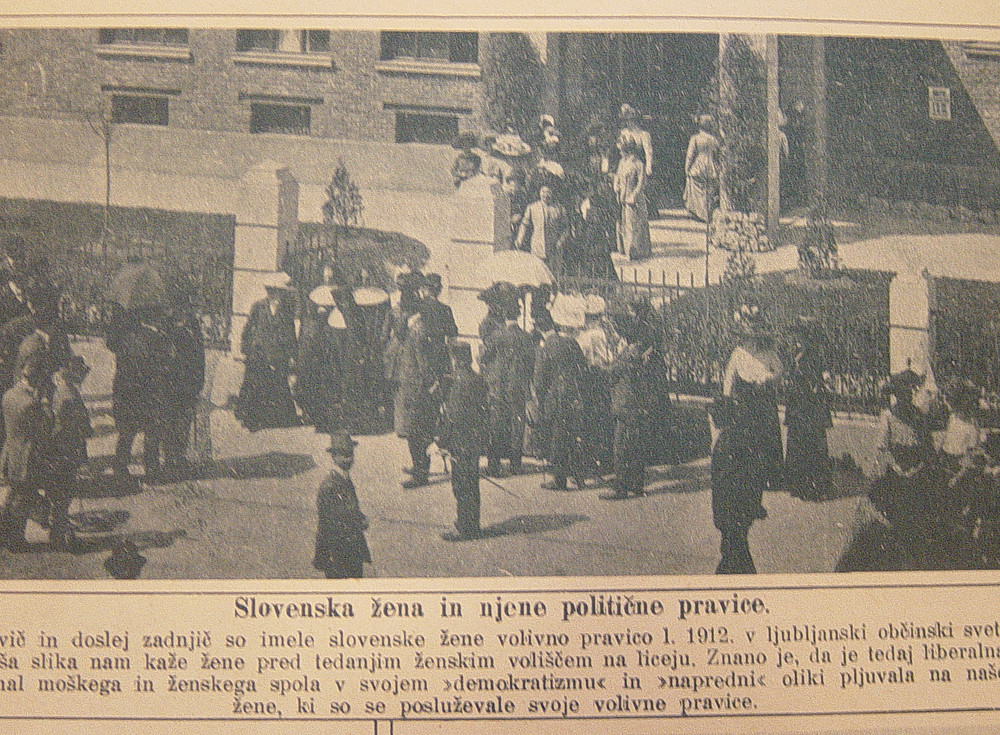
The Slovenian Women’s Movement in Carniola: Between Modernization and Moderation 1900-1941
MIT: Irena Selišnik (Ljubljana)
WANN: Donnerstag, 28. Mai 2026, 18:00* Uhr
WO: Lesesaal der FB Geschichte
Fachbibliothek Geschichte, Heinrichstraße 26/4, 8010 Graz & Online (Link: https://unimeet.uni-graz.at/b/sar-e0n-3rw-xgz)
KONTAKT: genderhistory(at)uni-graz.at
Abstract:
At the turn of the 19th to the 20th century, the first-wave women’s movement took shape in the Carniola region, advancing all the classic demands of the era: women’s suffrage, the right to work, and the right to education. Numerous women’s associations thus emerged from the tradition of women’s involvement in national societies and charitable work.
However, within the Slovenian women’s movement, differences emerged in the radicalism of their demands, shaped not so much by ideological distinctions as by the geographical, educational, and professional circumstances in which the first female publicists operated.
The lecture will also explore the relationship between the contemporary discourse on the division of the public and private spheres and everyday life, while simultaneously problematizing both spheres. The texts and sources thus demonstrate that numerous Slovenian female publicists and members of women’s movements challenged and questioned the very nature of these divisions in various ways.
Irena Selišnik is an associate professor of Slovenian and general modern history in the Department of History at the Faculty of Arts, University of Ljubljana. There she teaches the History of Slovenians in the 19th Century and the History of Women.
Her research focuses on gender studies, as well as the social and political history of the 19th century in the Slovenian region, within which she explores the significance of political and social movements, the history of emotions, social elites, and modernization.
Geographically, her work is linked to the Slovenian-speaking region and particularly to Ljubljana, which she studies within the spatial context of the 19th and 20th centuries.
She has published numerous articles on these topics in domestic and international academic journals and monographs, and has presented her work at conferences, symposia, and roundtables. She has lead projects related to urban history and digital historiography.
Dieser Vortrag findet im Rahmen des Forschungskolloquiums am Institut für Geschichte statt.